Houston building code 2025 remodel requirements are now the most critical factor in determining your project’s timeline and total return on investment. As of 2025, the City of Houston has fully transitioned to new standards—including the adoption of the 2021 Uniform Plumbing and Mechanical Codes—prioritizing climate resilience, energy performance, and high-tech electrical safety.
For homeowners in Central Houston enclaves like The Heights, Montrose, and River Oaks, these updates are not mere suggestions. They are strictly enforced technical requirements. At Square 1 Home Solutions, we take a performance-first approach to ensure your project is expertly built, legally compliant, and protected from the Gulf climate.
Table of Contents
Major Triggers for Houston Building Code 2025 Remodel Compliance
While routine maintenance usually doesn’t require a full code overhaul, the Houston building code 2025 remodel standards are legally triggered if your project involves any of the following:
- Substantial Additions: Any project that increases the square footage of the primary structure.
- High-Valuation Remodels: Any alteration where the project valuation is equal to or greater than 100% of the building’s current appraised value.
- Major Change of Occupancy: Converting a structure from residential to commercial use, or shifting to a more restrictive occupancy class.
- New Infrastructure: The construction of a new surface parking lot or the expansion of an existing lot by more than 25% (or 10+ spaces).
High-Efficiency Water Mandates: Conserving a Strained Infrastructure
Houston’s aging water infrastructure lost over 31 billion gallons in 2023 due to leaks and system stress. To combat this, the 2025 codes mandate significantly lower flow rates for all new fixtures:
- Toilets: The allowable standard is now 1.2 gallons per flush (GPF), a decrease from the previous 1.6 GPF benchmark.
- Faucets: New bathroom and kitchen fixtures must feature aerators with a maximum flow rate of 0.5 gallons per minute (GPM).
- Showerheads: WaterSense models operating at 2.0 GPM or less are the new baseline for compliance.
Electrical Safety: The GFCI and AFCI Expansion
Older housing stock in Central Houston is particularly vulnerable to fire risks. The 2025 electrical code expansion targets these vulnerabilities by aligning with modern National Electric Code standards.
If your remodel involves opening walls or updating your service panel, GFCI (Ground-Fault) and AFCI (Arc-Fault) protection must be extended to almost every circuit servicing a “wet” or “damp” area. This includes dedicated circuits for major appliances and lighting in kitchens, bathrooms, laundry rooms, and garages.
Building Envelope and Energy Performance Mandates
The City of Houston is targeting an average 8.9% increase in energy efficiency for all residential structures. This is achieved through stricter “building envelope” rules designed to keep the brutal Texas humidity out:
- Mandatory LED Lighting: Traditional incandescent and halogen fixtures will no longer pass a final inspection for new permanent installations.
- ENERGY STAR® Requirements: New dishwashers, ranges, and refrigerators must be ENERGY STAR Certified to meet green energy mandates.
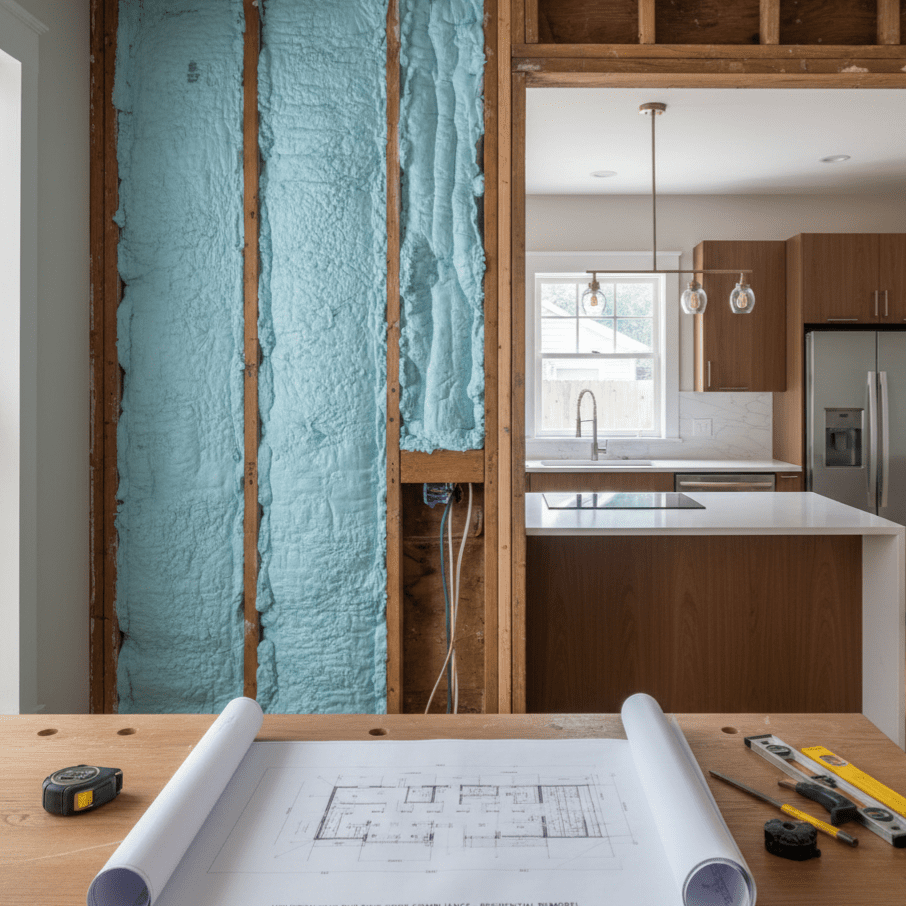
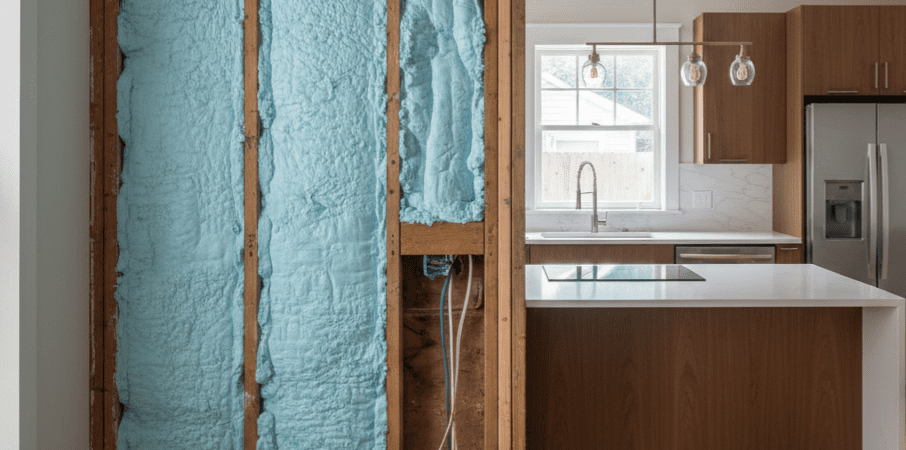
- Advanced Insulation: High R-value spray foam is now the preferred barrier against Houston’s humidity, preventing mold and structural rot.
- Attic Standards: CenterPoint Energy now recommends ceiling insulation levels of R-30 or higher for maximum grid resiliency.
Leveraging the $3,200 Efficiency Hack
The federal Energy Efficient Home Improvement Credit allows you to claim a 30% tax credit on qualified expenses up to $3,200 annually.
Expert Tip: Starting in 2025, you must include a unique Qualified Manufacturer Identification Number (QMID/PIN) on IRS Form 5695 to claim credits for heat pumps or central A/C units. Without this PIN, the IRS may deny the credit even if the equipment meets all efficiency specifications.
Strategic Permitting and Neighborhood Constraints
In flood-prone areas like Meyerland, the FEMA 50% Rule remains the ultimate threshold. If your remodel costs exceed 50% of the home’s market value, you must bring the entire structure into modern flood compliance, which often requires elevating the home.
In Houston’s 19 designated historic districts, you must also secure a Certificate of Appropriateness (COA) from the Houston Archaeological and Historical Commission before work begins. This includes the “50% damage rule,” which requires original wood windows and siding to be repaired rather than replaced unless the individual component is over 50% rotted.
Navigating Your 2025 Remodel with Square 1 Home Solutions
Navigating the Houston building code 2025 remodel process involves coordinating with the Houston Permitting Center, historic commissions, and utility providers.
- Timeline Reality: Expect 3 to 8 weeks for standard permit reviews, and up to 12 weeks for complex structural additions.
- The Licensed Advantage: Over 68% of DIY or uncertified permits fail initial inspections in Houston, leading to costly work stoppages and doubled fees.
At Square 1 Home Solutions, we handle end-to-end permit management so you can focus on your vision. We understand the mechanical and regulatory heartbeat of Central Houston.
Ready to modernize your home? Contact us today for a strategic consultation.